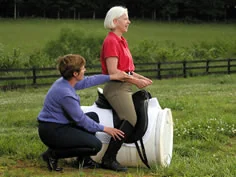
Creating Thinking Riders Through Awareness, Balance, and Communication
Rider Awareness is about much more than teaching someone how to sit on a horse. It is about creating thinking riders who understand how their position, balance, timing, and communication influence the horse beneath them.
For more than four decades, Randi Thompson has coached professional riding instructors and developed practical teaching techniques that have been used with thousands of horses and riders. These exercises help riders recognize what they are doing, understand how their actions affect the horse, and discover how small adjustments can create remarkable improvements.
One of the most effective ways to develop these skills is through unmounted exercises, where riders can focus on their position without also having to manage a moving horse. These discoveries can then be carried into mounted lessons, giving riders a clearer understanding of what correct balance, connection, and communication actually feel like.
Rider Awareness Techniques Include:
The Magic Barrel Horse: Discover how a simple barrel becomes a powerful teaching tool for developing balanced riding positions, rein connection, and body awareness before mounting a horse.
Communication From Both Ends of the Reins: Learn how rein length, hand position, and connection influence the messages riders send and receive.
Amazing Rider Position Fixes: Simple, memorable techniques that help riders discover their upper-body balance, seat bones, leg position, and alignment without becoming stiff or mechanical.
The Three Magic Riding Positions: Explore how changes in riding position affect balance, movement, and communication with the horse.
Is Your Horse Saying Yes, No, or Maybe? Teach riders to recognize when their horse understands and willingly responds, when the horse is uncertain, and when something needs to change.
Is Your Horse Waiting for You or Taking You? Help riders recognize whether they are influencing the horse’s direction, rhythm, and transitions or simply following along.
The Magic of Patterns: Use thoughtfully designed riding patterns to develop accuracy, preparation, balance, and consistency while giving riders clear goals.
Connecting Ground Poles and Riding Exercises: Discover how ground poles, patterns, and transitions can be combined to improve coordination, timing, and communication.
Preparing for Transitions: Teach riders how breathing, seat, legs, balance, and rein connection work together before asking the horse to change what it is doing.
Teaching Through Questions: Instead of always telling riders what to do, ask questions that reveal what they actually understand. Help riders explain what they felt, what happened, and what they might try differently.
Helping Riders Recognize Progress: Use practical exercises and meaningful feedback so riders can recognize improvements in their position, timing, balance, and communication.
The Goal: Creating Thinking Riders
These techniques give instructors practical ways to make riding lessons more engaging, effective, and meaningful. Rather than simply correcting a rider’s position or repeating instructions, instructors can guide students toward discovering the answers for themselves.
When riders learn to recognize what their horses are communicating, understand the effects of their own actions, and make thoughtful adjustments, they become more confident and independent.
That is what Rider Awareness is all about: creating thinking riders who become more effective partners with their horses.
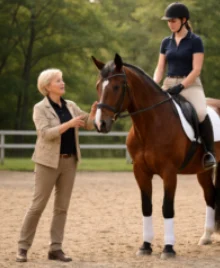
Understanding How Horses Think, Learn, and Communicate
Horse Awareness begins with understanding the horse. When we recognize how horses think, learn, respond, and communicate, we can make better decisions about how we teach, train, and interact with them.
These techniques have been developed through decades of practical experience with horses and riders of different disciplines and experience levels. They help instructors, trainers, and horse owners recognize what horses are communicating through their behavior, balance, movement, and responses to the people working with them.
The goal is to develop horses that understand what is being asked, respond with greater confidence, and become more comfortable and consistent in their work. Just as Rider Awareness® develops thinking riders, Horse Awareness helps people become more thoughtful and effective partners for their horses.
Horse Awareness Techniques Include:
Understanding How Horses Learn: Recognize how horses respond to new experiences, familiar routines, pressure, release, and consistent communication.
Communication From the Ground and Saddle: Discover how body position, timing, rein connection, and clear signals influence the horse’s responses.
Is Your Horse Saying Yes, No, or Maybe? Learn to recognize when a horse understands an instruction, when it may be uncertain, and when a different approach is needed.
Keeping Your Horse in Front of Your Aids: Develop horses that remain attentive, responsive, and engaged rather than becoming dull, distracted, or dependent on constant reminders.
Recognizing Balance and Self-Carriage: Learn to feel and observe when a horse is balanced, moving comfortably, and maintaining its own rhythm without unnecessary support from the rider.
The Magic Squares: Use structured patterns to develop straightness, accuracy, transitions, balance, and communication while making progress easier to recognize.
The Power of Preparation: Help horses understand what is coming next through consistent positioning, timing, and clear communication before transitions and changes of direction.
Building Connection One Step at a Time: Explore practical exercises that develop understanding and responsiveness through a series of achievable steps.
Recognizing Changes in Behavior: Learn to notice when a horse’s responses, movement, or willingness change and consider what may be influencing those changes.
Developing Confidence Through Consistency: Discover how clear expectations, thoughtful repetition, and appropriate rewards help horses become more confident in their work.
Helping Horses Become Thinking Partners: Encourage horses to recognize familiar signals, respond willingly, and develop confidence in understanding what is being asked.
The Goal: Creating Confident, Responsive Horses
Horse Awareness® techniques give instructors, trainers, and horse owners practical ways to improve communication while developing a deeper understanding of the horse.
Instead of focusing only on getting the desired response, we learn to consider how the horse understands the request, whether it is physically prepared to respond, and what its behavior may be telling us.
When people become more aware of the horse’s perspective, they can make thoughtful adjustments that improve trust, balance, responsiveness, and consistency.
Horse Awareness is about helping horses understand their people, while helping people become more aware of what their horses are communicating.