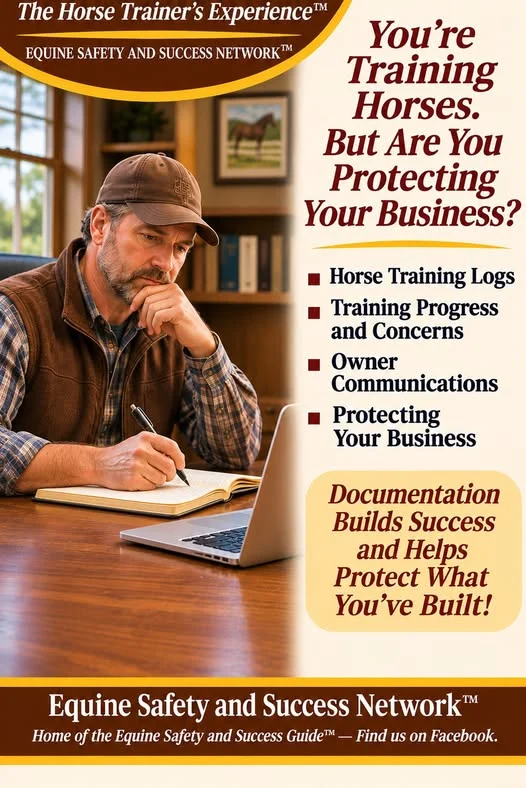
The Importance of Documentation in a Professional Horse Training Program
As horse trainers, we invest years developing our skills, building our reputations, and establishing businesses that allow us to do what we love. Yet one of the most important aspects of operating a professional horse training business is something that often receives far less attention than the training itself: documentation.
Keeping appropriate records isn’t simply an optional part of a training program. It’s a fundamental business practice that can support professional decisions, strengthen client relationships, reduce misunderstandings, and help protect the business and its assets when something goes wrong.
Your Paperwork Shouldn’t End When the Horse Arrives
Gathering information about prospective training horses, evaluating their abilities, establishing expectations, and completing the appropriate agreements before training begins are important steps in establishing a professional relationship.
But what happens to your documentation once the horse is in your care?
Every horse brings its own history, personality, physical condition, training experiences, and behavioral characteristics. As training progresses, you may discover things about the horse that were not apparent when it first arrived.
Documenting these observations can help you make informed training decisions, communicate more effectively with owners, and establish realistic expectations for the horse’s progress.
What Should Horse Trainers Be Documenting?
Depending on the nature of your training program, consider maintaining records that include:
- The horse’s initial evaluation and condition upon arrival.
- Training goals and expectations discussed with the owner.
- Training activities, observations, and progress.
- Changes in the horse’s behavior, physical condition, or performance.
- Equipment concerns and adjustments.
- Health concerns and recommendations for professional care.
- Communications with the owner, including important decisions and changes to the training program.
- Owner participation in lessons and other educational experiences.
- Incidents, injuries, near misses, and appropriate follow-up actions.
- Recommendations for continuing the horse’s training after returning home.
Documentation doesn’t have to be complicated or take an excessive amount of time. The goal is to establish a consistent process that becomes a natural part of your daily business practices.
Keeping Horse Owners Connected During Training
When owners send their horses away for training, they may have very different expectations about how often they will receive updates, what those updates will include, and how involved they will be in the training process.
Establishing these expectations before training begins can help prevent misunderstandings.
Regular progress updates, photographs, videos, scheduled conversations, and opportunities for owner participation can help owners better understand what their horses are learning and what will be expected of them when their horses return home.
When important conversations take place by telephone or in person, consider following up with a brief written summary. This gives everyone an opportunity to confirm their understanding of what was discussed and agreed upon.
Who Is Evaluating the Owner’s Riding Abilities?
A horse may make tremendous progress during training, but what happens when that horse returns to its owner?
Evaluating the abilities of the person who will be riding or handling the horse is an important consideration in developing a successful training program.
Whenever appropriate, provide opportunities for owners to develop the skills they will need to continue working with their horses. Document their participation, progress, and any recommendations you make regarding additional instruction or professional assistance.
Our Rider Evaluations Toolkit Collection™ explores practical ways to evaluate rider abilities, document progress, and support appropriate horse-and-rider placement.
When Something Unexpected Happens
Even in well-managed professional training programs, unexpected situations can occur.
Having established procedures for responding to and documenting incidents can help horse professionals gather important information while the details are still fresh.
Incident documentation should focus on factual observations, the circumstances involved, actions taken, communications with those involved, and any appropriate follow-up.
Our Incident Toolkit Collection™ explores practical approaches to incident preparedness, response, documentation, and follow-up.
Establishing Clear Rules and Expectations
One of the most effective ways to reduce misunderstandings is to establish clear expectations before they become an issue.
Horse owners should have an opportunity to read, ask questions about, and acknowledge the rules and expectations associated with your training program.
When policies change, those changes should also be communicated and appropriately documented.
Our Rules & Expectations Toolkit Collection™ provides educational guidance, communication examples, forms, and practical tools to help horse professionals establish and maintain consistent business practices.
Documentation From an Equine Expert Witness Perspective
Through my work as an equine expert witness and litigation consultant, I have seen how important documentation can become when questions arise about the decisions, actions, and practices of horse professionals.
Having written policies is only part of the process. Being able to demonstrate how those policies were communicated, understood, and implemented is equally important.
While documentation cannot prevent every incident or guarantee legal protection, it can provide valuable information about the professional practices and decisions that were in place.
Perhaps even more importantly, establishing consistent documentation practices can help professionals identify and address concerns before they develop into more serious problems.
The Horse Trainer’s Experience™
Through the Equine Safety and Success Network™, we are currently exploring The Horse Trainer’s Experience™, an educational series focusing on the relationships, responsibilities, communication, documentation, and everyday practices involved in professional horse training.
Our goal is to develop practical educational resources that horse trainers can adapt to their individual businesses, horses, clients, and training programs.
These resources are being developed as part of the Equine Safety and Success Guide™, through our Steps to Your Success™ and growing library of Toolkit Collections™.
We invite horse professionals to participate in our free Equine Safety and Success Network™ Facebook Pilot Community, where we share experiences, explore practical solutions, and help develop educational resources that reflect the realities of working with horses and people.
The Horse Trainer’s Experience™ Toolkit Collection
Through the Equine Safety and Success Network™, we are currently developing the Horse Trainer’s Experience™ Toolkit Collection as part of our Equine Safety and Success Guide™.
This upcoming Toolkit Collection will provide educational guidance, communication examples, forms, checklists, and practical resources designed to support professional horse trainers throughout the training experience.
We are exploring topics that include:
- First contact with prospective horse training clients.
- Gathering information and evaluating prospective training horses and their intended riders.
- Establishing clear rules, expectations, and training agreements.
- Preparing horse owners for the training experience.
- Welcoming horses and their owners into the training program.
- Keeping horse owners informed, connected, and involved during training.
- Documenting training activities, observations, progress, and important communications.
- Incident preparedness, response, documentation, and follow-up.
- Preparing horses and their owners for continued success after the horse returns home.
Our goal is to provide more than a collection of forms. We want to help horse trainers understand how to put these resources to work in their everyday business practices.
The Horse Trainer’s Experience™ Toolkit Collection is currently being developed through our Steps to Your Success™ educational resources, with input from horse professionals participating in our free ESSN Facebook Pilot Community.
We invite you to follow our progress and become part of the development process by joining the Equine Safety and Success Network™ Facebook Pilot Community.
In the meantime, we invite you to explore our growing collection of Equine Safety and Success Guide™ Toolkit Collections™.
You’re investing in the future of the horses you train. Make sure you’re also investing in the future of your business.
Additional Resources for Horse Professionals and the Legal Community
Explore our growing collection of educational resources, professional perspectives, and practical tools.
- Equine Safety and Success Network™ (ESSN): Discover how we’re helping horse professionals develop successful businesses, strengthen professional practices, and improve the experiences they provide.
- Equine Safety and Success Guide™ Toolkit Collections™: Explore educational guidance, practical tools, and resources designed to support everyday horse operations.
- Equine Expert Witness and Litigation Consulting Services: Discover professional equine industry expertise and consulting services for attorneys, insurance professionals, and the legal community.
Connect With Us on Facebook
Equine Safety and Success Network™ Facebook Pilot Community
Would you like to be part of developing the Equine Safety and Success Guide™? Join our free pilot community, where horse professionals come together to explore practical ideas, share experiences, and help develop and refine the educational resources we’re creating.
You don’t need to have all the answers. You simply need an interest in exploring ways to make the horse experience better for everyone involved.
Equine Expert Witness Facebook Page
Follow professional perspectives, educational articles, and insights into equine industry standards of care, professional responsibilities, business practices, documentation, and horse-related litigation.